
ASUTIL Secretary General talks anniversaries, customs and harmonization
Carlos Loaiza Keel took over the post of Secretary General of ASUTIL in October 2023. The Punta Cana conference will be Loaiza Keel’s third conference after two successful events in Bogota and Lima. John Gallagher caught up with Carlos Loiza Keel to hear about what ASUTIL has been up to in recent months and their plans for the future.
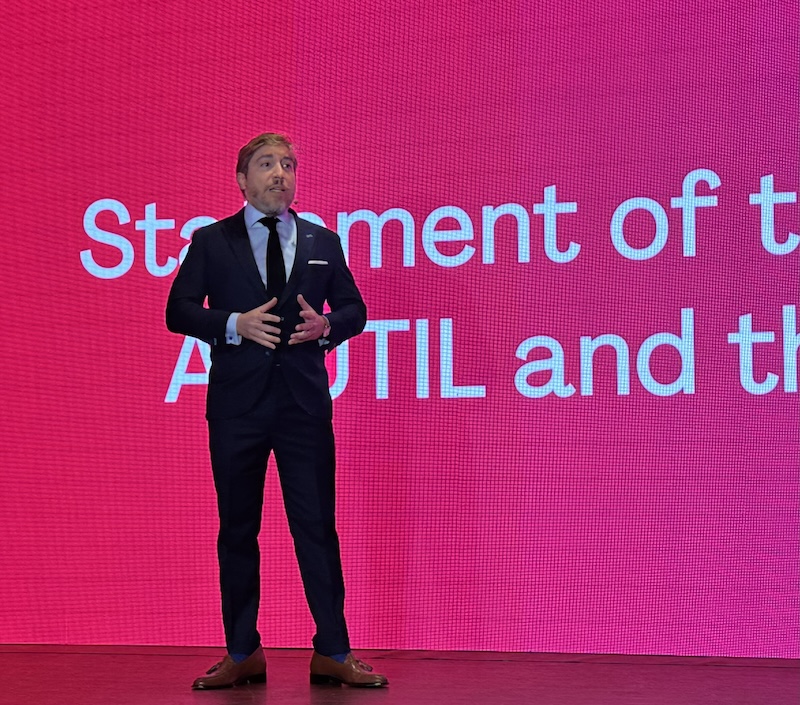
TMI: 25 years of conferences, 30 years of ASUTIL as an association — how does ASUTIL view the past, and how does it look to the future?
CLK: ASUTIL looks at its past with pride and gratitude. Over three decades, the association has been shaped by defining moments in which the region needed unity, clarity, and a strong collective voice. From securing improvements in duty free allowances to advancing regulatory frameworks for border regimes, ASUTIL has built a legacy of disciplined, evidence‑based advocacy. More recently, the success at MOP4, where we were able to disassociate the legitimate duty free business from illicit trading in tobacco products — achieved in close collaboration with the Duty Free World Council—showed once again that Latin America can influence global policy when it brings technical rigor and regional alignment to the table.
But anniversaries are meaningful only if they illuminate the road ahead. ASUTIL sees the future as a period of transformation: more digital, more data‑driven, more interconnected across channels, and more dependent on modern, harmonized regulation. The next chapter will require the same spirit that defined our first 30 years—collaboration, discipline, and a deep understanding of the region’s unique dynamics—combined with a renewed ambition to shape, not simply adapt to, the future of travel retail in Latin America.
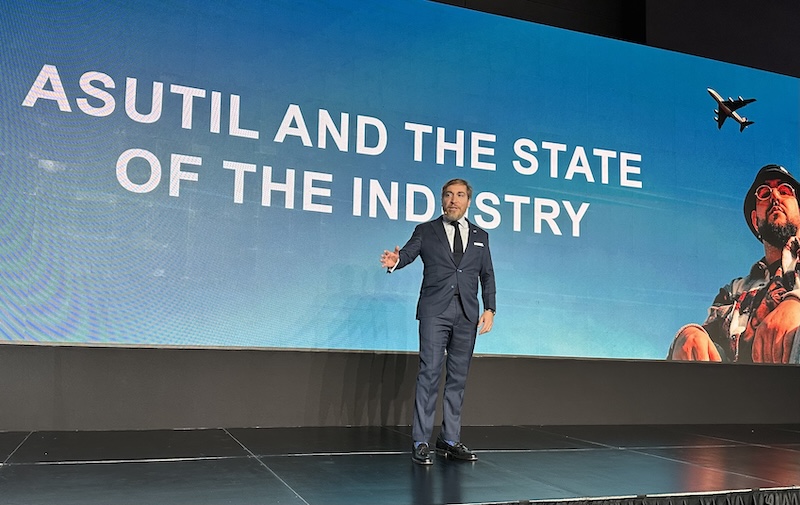
TMI: How big a role will ASUTIL play in customs modernization in Mercosur?
CLK: ASUTIL intends to play a central and constructive role in the modernization of customs processes across Mercosur. This is not a theoretical ambition; it is grounded in concrete, recent experience. In Brazil, we have been working closely with the ¨Receita Federal¨ to improve the efficiency and clarity of existing regulations, ensuring that rules evolve in a way that supports legitimate commerce while maintaining robust controls. In Uruguay, our collaboration is even more structured: ASUTIL participates in formal, permanent working groups with the Ministry of Economy and the National Customs Directorate, where we address operational challenges, propose regulatory improvements and help shape a more agile and predictable framework for the sector.
These experiences demonstrate that modernization succeeds when authorities and industry work together with technical rigor and mutual trust. ASUTIL brings data, operational insight, and a regional perspective—elements that are essential for designing customs systems that are modern, efficient, and aligned with international best practices. We see ourselves not only as advocates, but as long‑term partners in building a more competitive and forward‑looking Mercosur.
.
TMI: Will ASUTIL advocate for a united border shop framework in Latin America?
CLK: ASUTIL believes strongly in the value of greater coherence and alignment across border‑shop regimes in Latin America—but that does not necessarily mean a single, uniform framework. Each national regime has its own history, legal tradition, and operational reality. Uruguay’s system, for example, is one of the oldest and most established in the region, while Brazil’s is more recent and was inspired by the airport regime. These differences are not weaknesses; they reflect the diversity of the region and the specific needs of each market.
What truly matters is ensuring equitable competitive conditions—a genuine level playing field—so that operators across countries can compete fairly and sustainably. Achieving that requires more ingenuity than simply standardizing all regimes. It means aligning principles, ensuring consistency with Mercosur rules, and promoting transparency, predictability, and balanced competition. ASUTIL will continue to advocate for these objectives, always respecting the unique characteristics of each national framework while working toward a more coherent regional environment.
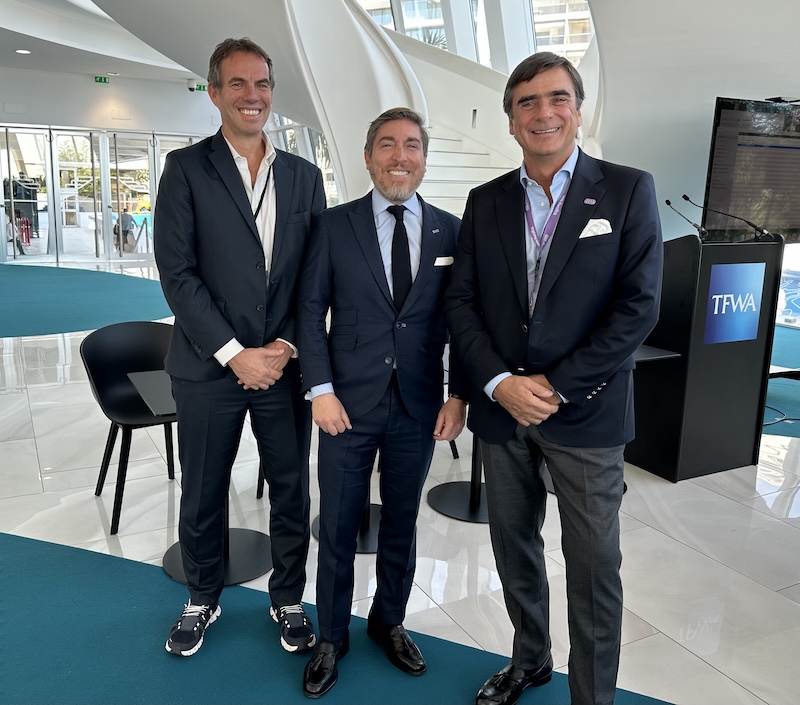
TMI: And what about harmonization of customs rules throughout the Mercosur area?
CLK: That is an excellent question, and in many ways the word harmonization precisely captures the spirit I was trying to convey in the previous answer. The goal is not uniformity for its own sake, but an alignment approach that respects the particularities of each national regime while ensuring coherence, predictability, and fair competition across the region.
ASUTIL’s role in this process is to bring evidence, clarity, and regional perspective to the table. Our collaboration with m1nd‑set has become a powerful tool in this regard: it provides granular, nationality‑specific traffic and shopper insights that help governments understand how regulatory choices affect traveler behavior, commercial performance, and the competitiveness of the channel. The feedback from our members has been extremely positive, and the data is already informing constructive conversations with authorities across Mercosur.
I cannot address harmonization without mentioning the recently concluded EU–Mercosur agreement. First, because its progressive tariff‑reduction schedule will likely have medium‑term implications for relative prices and the competitiveness of our industry’s channels—an issue we are already evaluating with Mercosur governments and specialized consultants. And second, because the agreement’s regulatory and institutional standards will inevitably encourage a more disciplined and coordinated approach to harmonization among Mercosur members. In other words, it is both a development to watch closely and a significant opportunity for the region.
Harmonization, therefore, is not a technical exercise; it is a strategic one. It requires data, dialogue, and a shared vision of what a modern, competitive, and integrated Mercosur should look like. ASUTIL is committed to contributing to that vision with the same rigor and collaborative spirit that has defined our advocacy for the past three decades.