
Cruise Terminals International (CTI) was created a little more than three years ago as a partnership between Royal Caribbean Group and iCon infrastructure, a private equity fund based in the UK, to develop, own and manage cruise terminals at strategic destinations around the world. The organization has quadrupled its operations in that time, Greg Lanter, CTI CEO tells Travel Markets Insider.
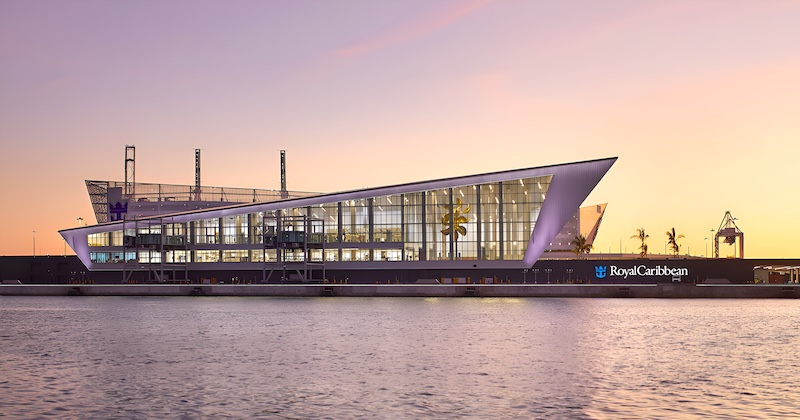
CTI owns and operates the iconic Royal Caribbean Terminal A at PortMiami – which was opened in 2024 — and has four other projects in development this year: the Ravenna Civitas Cruise Port, the Catalonia Cruise Terminal G in Barcelona, the Rome Fiumicino Waterfront Project and Crown Bay in St Thomas, US Virgin Islands. The company currently manages terminal projects with an investment value totaling almost $1.3 billion and is actively working on a pipeline of projects representing over $2 billion of capital expenditure.
CTI’s strategy is to offer a comprehensive, turnkey solution for cruise destinations, from design to operation.
“CTI was created to give the cruise industry an independent platform capable of buying cruise terminals and cruise destinations, and renovating, enlarging, and modernizing them to make them more tuned to our time; not only accommodating the new size ships that are cruising, but also more tuned to customer expectations. This means developing new ports and destinations with the best that their tourism can offer,” explains Lanter.
CTI has brought together some of the best professionals from different cruise lines, all with long-term experience and expertise in developing cruise terminals and destinations.
“Our goal is to develop these places to offer best-in-class service, at the same time giving back to the local communities. The programs we are working on are ahead of the industry in terms of community engagement with a strong focus on sustainability from construction to operations.”
Lanter, who joined CTI from Club Med where he was Deputy CEO, brings in experience from the wider tourism industry.
“Club Med, which was the founder of the all-inclusive resort concept 70 years ago, has been a pioneer in many ways, developing tourism in places that had no tourism before. And I have learned that first, developing tourism is a good thing, but second, that it needs to be done in the right way.
“Tourism can bring local people development, wealth, and training opportunities, but it only works if you do it by including the local stakeholders from the very beginning of a project. We must make sure that what we develop is done the right way for the local stakeholders,” he insists.
Barcelona & Community Engagement
Citing the next-generation cruise facility that CTI is developing in Barcelona – a destination that has been protesting over-tourism, Lanter says that the terminal will be a vibrant public space that celebrates what makes Barcelona special when it opens for operations in April 2027.
“Our vision for this project will deliver a terminal which will welcome cruise guests with an iconic building, easily accessible transportation facilities and a strong sense of place that will integrate travelers and the city. It’s being woven into the environment and community, with sustainability and innovation that goes well beyond just moving passengers,” he notes.
“Even more than anywhere else, we developed the terminal in Barcelona with a Community Engagement Plan connected to the local stakeholders, connected to the local NGOs, connected to the local schools. Not only is the terminal certified Leeds Platinum but it will be producing its own energy and even supplying extra to the local power grid.
“Barcelona is an example of what the cruise terminals and destinations should be in the future.”
Crown Bay, St, Thomas – local input for Retail Village
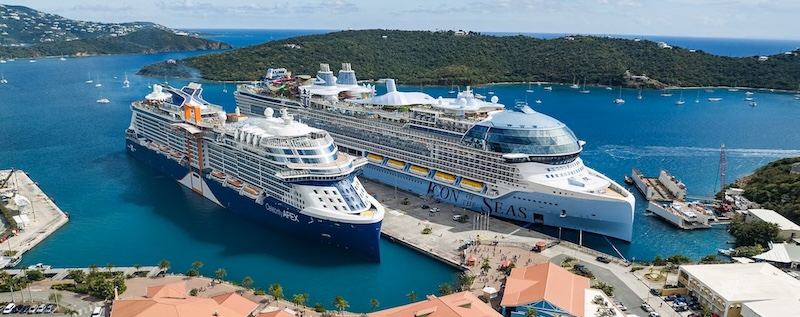
CTI has been strongly engaging with the local community – particularly retailers – at its upcoming redevelopment project at the Crown Bay port in St. Thomas, USVI.
CTI will take over the operation of the 30-year-old port facility in July to improve the destination and prepare it for future growth. Working in partnership with the Virgin Islands Port Authority and Royal Caribbean Group, CTI is delivering major improvements to both land and marine areas, upgrading existing berths and adding a new Icon-class third berth.
It is also modernizing and expanding the retail village, improving ground transportation areas, and enhancing amenities for a better guest experience – all with considerable input from the local population.
“There are about 40 local retailers in Crown Bay, selling souvenirs, jewelry and various merchandise. The CTI team has been having lengthy interviews with each retailer to understand where they come from, what’s been successful, what difficulties they face.
“Some of these retailers have been at Crown Bay since it opened 30 years ago, and we’ve approached them to get their input for the retail park.”
“We want their ideas as we modernize the retail space, and create a vibrant waterfront destination, bring in an additional Food & Beverage, and a full shopping experience.”
Lanter says that CTI will also be addressing traffic flow and reducing congestion while improving connections between the port and island attractions. The improved retail village will also serve as an attractive waterfront public space for local residents when ships are not at port. In phase two of the project, Crown Bay will also build a water park.
“By increasing the destination’s ability to safely welcome more cruise guests while creating new revenue opportunities, we’re supporting the broader tourism ecosystem that drives St. Thomas’s economy,” he says.
Looking ahead, CTI will be completing projects in Spain and Italy and aims to expand into new markets, including Central and South America, to follow the needs of cruise lines.