
Special Report by John Gallagher
The Argentine government has finally published new legislation to control land border duty free stores in the country. Argentine law 438/2026 is in essence a copy of the Mercosur law issued on December 16, 2018 that regulates duty free stores situated adjacent to land borders throughout all member states in the Mercosur customs area.
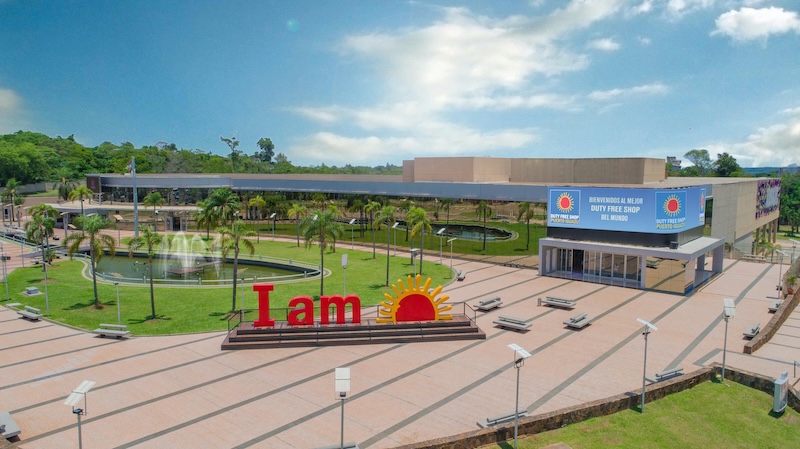
In reality, the new Argentine legislation does not make any changes to how the duty free business is operating in Argentina at the present time. The only land border store in operation at the moment, the London Supply flagship store in Puerto Iguazu, will continue to function as it has been doing for the last 25 years, under Argentine Free Zone legislation.
However, the new legislation does open the possibility of new stores on other border crossings, where the movement of travelers could make a duty free store commercially viable. The Argentine Customs Authorities and the Ministry of Finance will vet all applications and will shortly issue the regulations that will control all new operations.
The most likely candidates to host a new duty free store would seem to be Gualeguaychú – adjacent to Fray Bentos in Uruguay, Cristo Redentor (Mendoza) – the most important land crossing from Argentina to Chile, and Paso de los Libres, adjacent to the Brazilian town of Uruguaiana.
Which operators could be interested in new stores in new locations? Avolta operates land border stores in Uruguaiana in Brazil and Fray Bentos in Uruguay and may seek to stop competitors from “stealing” market share from these stores by establishing stores in Argentine territory. The big question is whether new stores would increase the total size of the business to make the new ventures commercially viable or would the new stores just reduce the average sales in each store.
Argentine Customs would be keen to ensure that no merchandise would leak back into the domestic market and would surely seek to ensure that the companies who sought to open in the new locations were viable. Avolta clearly has the network to ensure a clear logistics route to any new stores. Observers commented to Travel Markets Insider that London Supply had a careful look at an operation in Paso de Los Libres several years ago, at the request of the provincial government. Could the company supply a store there from their logistics hub in Uruguay?
The Cristo Redentor border crossing in Mendoza is a different case. There are no stores currently on the Chilean side of the border and a store on the Argentine side with a quasi-monopoly, at least in the initial stages, could take advantage of traffic flows on the busy border crossing. But logistics will be a crucial factor to the success of any potential operation – where would stores be supplied from? Potential operators may decide it is easier to navigate a 4-hour journey from Chilean ports to Mendoza than an 18-hour journey from Buenos Aires. Clearly, it could make commercial sense for a shop operator to seek supplies from Chilean bonded warehouses.
Calos Loaiza, secretary general of ASUTIL told TMI, “We in ASUTIL, as an institution that defends the industry, celebrate that the duty free regime continues to consolidate and gain legitimacy across the whole of Latin America. This new law in Argentina is a new milestone in that direction. Furthermore, we will continue collaborating with all the governments, as we have been doing for many years and are doing right now, to ensure that this consolidation is grounded in the principles of transparency and cooperation with the authorities, and that it is harmonious within the entire framework of Mercosur integration and its Member States. Even more so at a time when this framework is looking toward a future of greater global integration, following the signing of the treaty with the European Union. All of this is essential to ensure that the duty free network continues to provide certainty for investment and opportunities for quality employment and training for so many families in our countries, who are always the primary motivation and driving force.”