
One on One with Raymond Kattoura
One year after Buenos Aires-based Perfumerias Rouge announced it was expanding into the Caribbean and launched its first stores in Grand Cayman in July of 2015, the aggressively growing company audaciously forecast that it was on track to deliver 15 stores within two years.
A water-front perfumery in St. Thomas, an extensive presence in Grenada, and two stores in St. Croix soon followed, and the company has since added locations in Sint Maarten, Trinidad & Tobago and Tulum, Mexico, as well as opening the only Creed Boutique in the Caribbean in St. Barth. Today the pan-Caribbean powerhouse operates 24 of some of the most elegant shops in the region that feature a distinctive portfolio of brands and a luxurious style of retailing.
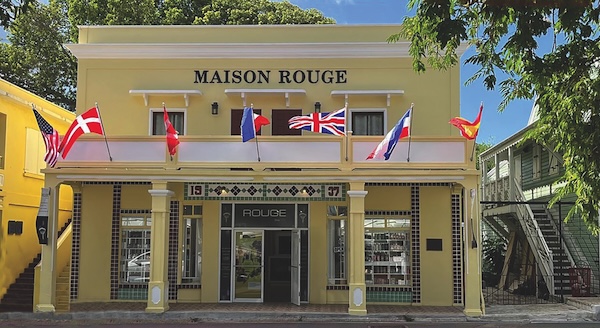
This incredible success is largely attributed to Raymond Kattoura, whose company Duty Free & Travel Retail Group Inc. manages the business for Rouge Duty Free, the Caribbean and North American business for Perfumerias Rouge, one of Argentina’s leading beauty companies.

Kattoura has been a major presence in the Americas duty free business since the 1980s, where he is responsible for some of the most lasting and memorable launches in the region. His long history in the Caribbean and hands-on approach have given him unique insights into travel retail in this market.
A native of Israel, Kattoura came to the United States for college, ending up in Palm Beach and Miami, where his strong international network enabled him to open a boutique in exclusive Key Biscayne carrying high-end fashion brands like Claude Montana and Versace. The shop also carried perfumes, and Kattoura was eventually recruited by La Prairie, which was just launching at the time, to open some international markets for them.
“I started in St Thomas, where I found Tropicana, whose owner, the legendary Estelle Roth, helped me a lot,” recalls Kattoura. “From St Thomas, I opened St. Martin, Aruba, Curaçao, Cancun and Mexico City and others.”
The company distributing La Prairie then added the Donna Karan fragrances to the portfolio, and Kattoura took the fragrance to the Caribbean.
This was in the early 1990s and Louis Bared, one of the most important retailers in the Caribbean running such stores as Perfume Palace, Bolero and Cartier, introduced Kattoura to Luis and Norma Quintero, who were establishing a fragrance distribution company called Genesis, which went on to become one of the most successful duty free companies in the region for the next decade.
“Genesis was a new company at the time. They didn’t have many lines. But they made me a very good offer and I took it, although the decision to leave La Prairie was really hard.”
Kattoura’s role at Genesis entailed a lot of travel to Italy, where he met the major houses in the Fragrance and Beauty industry as well as the designers .from Scariboldi of EuroItalia, Dr.Martone of ICR, Eurocosmesi, Itiery ,and many others and reconnected with many of the Italian designers he had met when operating the fashion boutique.
“We became a close family, where we shared travel, vacations and many other great memories. I remember the designer Gai Mattiolo, who used to spend a month in Miami each year so we could vacation together. And there were many other stories,” he recounted.
“Through my travel for the fashion, I had a lot of contacts in Paris, Monte Carlo and Milan. And they were all producing fragrances. Whenever they looked for somebody to represent them in the U.S., they would call me, and we brought them to Genesis,” he said.
In this way, Genesis represented all the brands for Euroitalia, adding Versace and the Eurocosmesi brands as well. Then they added the French lines.
“We had a huge portfolio of fragrances, all the leading German, Italian, and French brands. Genesis quadrupled in size and had to move from a small place in the Free Zone to its own location in North Miami,” said Kattoura.
As Executive Vice President at Genesis for more than 10 years, Kattoura managed the Caribbean, North America duty free and South America duty free and local markets, including cruise ships and airlines.
“So it wasn’t only duty free, which actually was very helpful. You get to know the market better when you know the local market. It gives you more insight on how the market operates.
“At the same time, the world was going through a lot of changes. We had NAFTA, we had weather issues, hurricanes, earthquakes, devaluations. These are all experiences you have to plan for. And we survived very well. I think we had as many as 40 fragrances in the portfolio, as well as some accessories. It was a good a good time for distribution here.”
During those 10 years Genesis held some of the most legendary launches and activations that the industry has experienced.
“It was a different time. It was before the market crash. Big launches were very fashionable, and it was a good business decision to do elaborate launches at that time, because it showed the retailers that if we were putting money behind the brand, it had to be really worth it,” commented Kattoura.
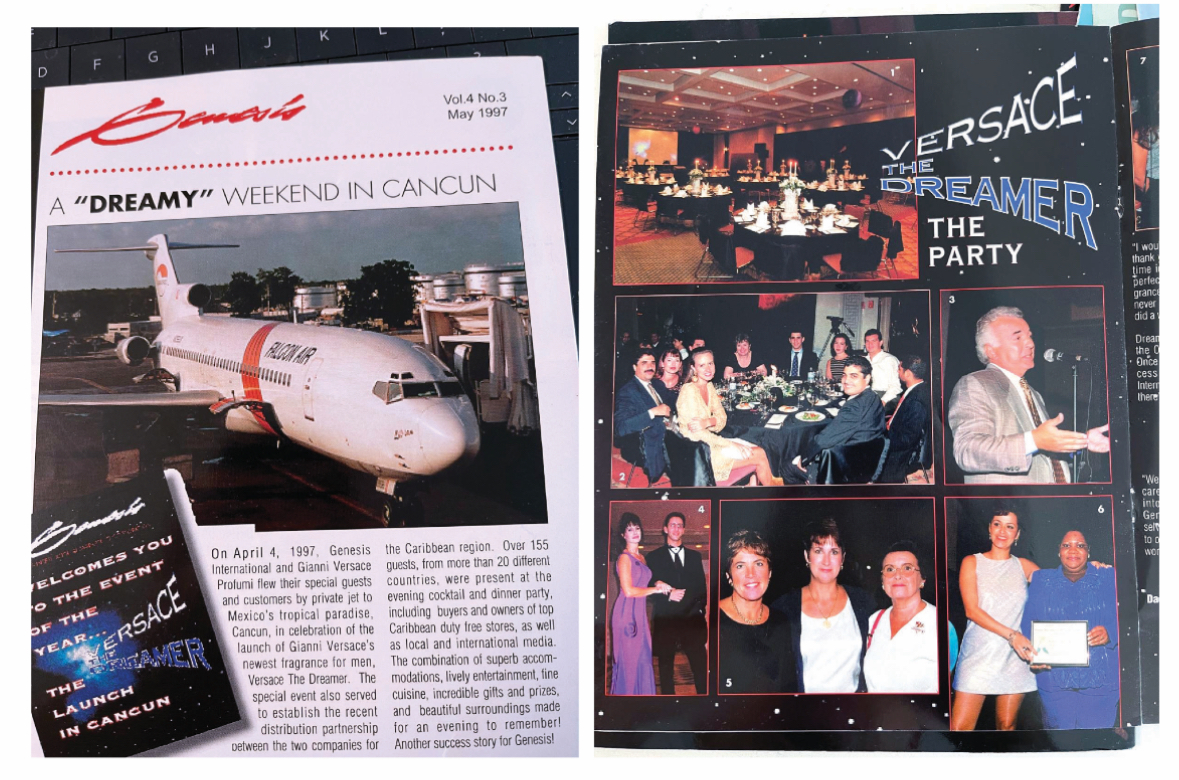
Among the most legendary such launches was the one for Versace Dreamer, held in Cancun in the early 1990s.
“The Versace line was already distributed in the region but it was not doing well, and we needed to relaunch it, to show everyone that this was a whole new thing. So we asked for a huge budget. The Versace company thought that was crazy, but they went with it.
“We rented a whole hotel to do a fashion show, and we rented a 727, calling it Versace Air, and flew all our guests from Miami to Cancun to show them the strength of Versace. We had girls greeting everyone on the tarmac, and Versace-draped Mercedes buses to transport them to the hotel; we even created little fresh towels scented with the Versace Dreamer perfume. These are the kind of details that we did,” he recalled.
Genesis also held many launches at Disney World, as well as aboard cruise ships, and was equally as active in South America, especially in Brazil.
“These were very, very good launches. They were expensive launches. They were legendary, but they paid off. They paid off because opening orders covered all the expenses,” said Kattoura.
“After the market crash, we could not do these elaborate parties because it didn’t work. But at that time, they were perfect. They were the right tools to use.”
After the market crash and 9/11, the market changed, although the Caribbean was emerging as a major duty free destination. Kattoura left Genesis in 2024 to take a sabbatical, but after representing a watch brand for a while, he began working with the Roberto Cavalli fashions and fragrances, where he stayed until about 2012, when he joined with a company launching Sharper Image into duty free. This company became Duty Free Partners, where Kattoura stayed, helping to open stores, until 2015. This is when he joined with Rouge, where he has successfully built the chain from zero to 24 points of sale across six islands and Tulum, Mexico.
Looking at his 40+ years working in the Americas fashion, beauty and duty free channels, Kattoura has learned several key lessons about working in this market.
“Things change, distribution changes. The Caribbean has changed a lot, but if you haven’t been here since the beginning, you would never know it changed,” he argues.
According to Kattoura, such changes presented new challenges to the distribution and market competition:
“The distribution model in the Caribbean shifted significantly, with more focus on numbers and less on brand image. Competition increased, and it became cheaper to buy products in the U.S. than in duty free stores, making it harder to maintain exclusivity and profitability.
“It is critical to recognize that each island had unique needs and customer bases. We build business by targeting the local market and hotels, rather than relying solely on tourists and cruise ships. It is also important to adapt product offerings and events to suit local tastes and needs.
“The importance of always having products in stock and providing excellent service so customers don’t have to wait or look elsewhere, cannot be overstressed,” he says.
Building trust with the local community is also essential.
“We invest in local events, charity, and staff engagement, making our stores an active part of the community. We enhance this by hiring loyal staff, paying them well, and maintaining strict discipline regarding store hours and customer service. Staff are also encouraged to engage with their networks to promote the business,” he adds.
“To succeed in retail, especially in the Caribbean, an operator must be adaptable and innovative. At Rouge we have invested in radio, social media, and new types of events (like ‘sip and shop’ or ‘Christmas in July’) to keep customers engaged. You also must be willing to invest and to take risks, understanding that risk and occasional failure are part of growth,” concludes Kattoura.