

A multi-million dollar redevelopment project is underway at Canada’s Peace Arch Duty Free Shop. In an exclusive interview, Peter Raju, President and CEO, talks Luke Barras-Hill through the plans and his hopes for the business amid the latest Canada-U.S. trade dispute.

Peace Arch Duty Free’s Peter Raju faced a stark choice in the wake of the Covid-19 crisis: turn the business around or walk away. In 2022/2023, the retailer was forced to shut its doors due to pandemic-related border restrictions.
“We opened back in 2024 and everything was going great,” he told Travel Markets Insider (TMI), before referencing President Trump’s overtures around Canada becoming the ‘51st state’ as negatively impacting U.S.-bound traffic at the border.
“We were evaluating the way things were going across Canada. We were losing money and had to make [one of] two difficult decisions: Close the shop or reinvest.”
Fortunately for Canada’s largest land-border duty free location, established on Se-Mi-Ah-Mu First Nation land, it chose the latter. Situated at British Columbia’s busiest land-border between Vancouver and Seattle, the store is well positioned to capitalize on strong traffic volumes, with the crossing serving approximately 4,800 vehicles a day.
A C$6.5 million investment to regenerate the shop and its outdoor areas began in January this year. Exterior works including a new water feature, children’s playground and landscaped gardens were completed recently, which Raju says has helped the business, notably in June and July.

“Peace Arch is a tourist destination not a commercial crossing – 90% are tourists or Canadians on holiday,” he explained. “We’ve created a real park and built a children’s play area of about 5,000 square feet, so it’s become a destination for parents stopping over. We have an extensive coffee shop and a lot of seating.”
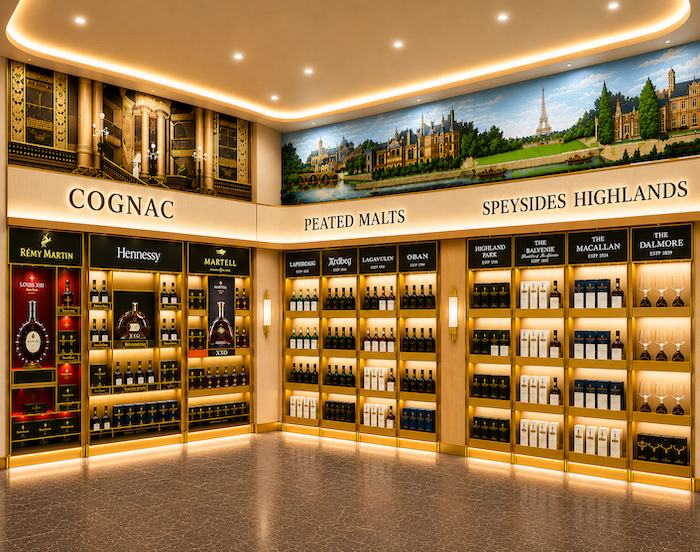
The priority now is on interior refurbishments with the store set to carry an expanded and enhanced product offering. An array of Canadian merchandise will join internationally recognised brands across perfumes & cosmetics, luxury fashion – including an expanded menswear collection – food & confectionery, leathergoods, designer watches and wines & spirits.
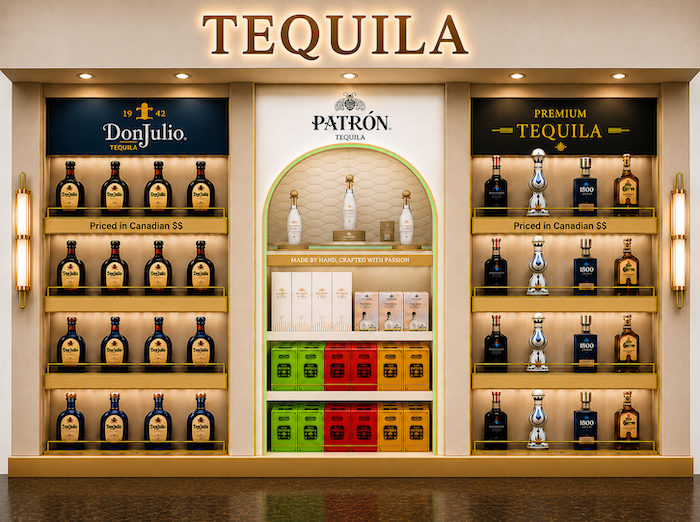
Upgrades to the liquor aisles will be followed by wines and cosmetics, leathergoods and luxury watches, before works commence on the perfumes, food & confectionery and clothing areas.
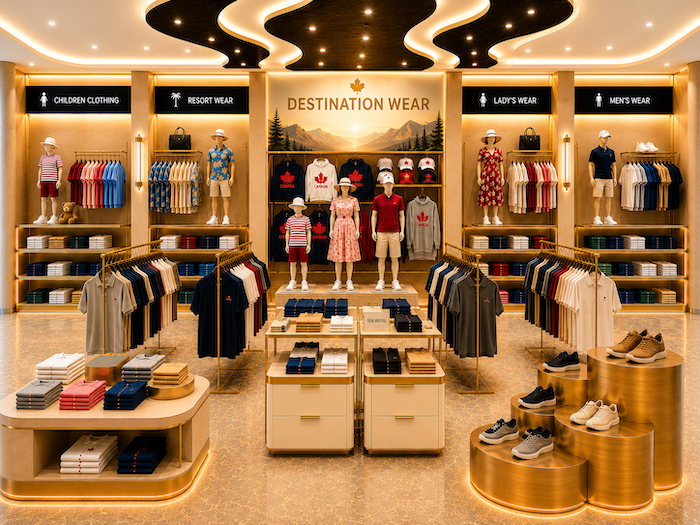
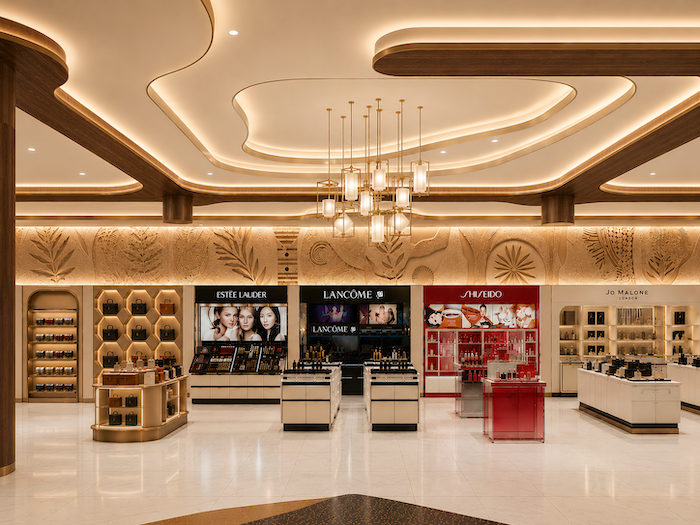
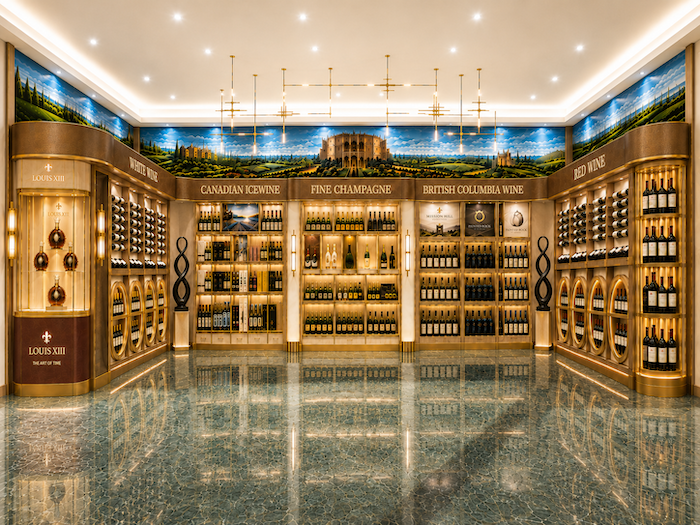
“We will keep them open,” said Raju, who expects 90% of the newly renovated sections to be open by the U.S. Thanksgiving holiday on November 26th.
Leading sales contributors are cosmetics, aided by Korean brands, while Dubai perfumes remain the number one best-selling fragrance range. Attractive price points and lower margins on products are also helping to boost sales, confirmed Raju. Meanwhile, assortments have been extended to cover electronics, children’s toys and trending categories such as ladies’ leisurewear and children’s designer clothing.
Regular TMI readers will recall that Peace Arch Duty Free Shop expanded in 2005 when it opened a 22,500-square-feet building featuring 18,000-square-feet of net retail space. Despite the latest overhaul, Raju confirms this footprint has not changed.
Raju insists that once the renovation is completed, Peace Arch Duty Free will become one of the world’s most luxurious land-border duty free facilities, drawing its inspiration from a Middle East-inspired design aesthetic to lift the customer experience.
This summer’s FIFA World Cup (June 11 –July 19) offered healthy impetus for footfall and sales, observed Raju, as many travelers, including those from Latin America, flew to Seattle before driving across the border to host city Vancouver.
When TMI spoke to Raju in early August, he reported a stagnant start to business in 2026, though improvements were registered from May as sales increased over the summer months. June and July yielded revenue growth of more than 40% helped by rising cross-border traffic, with near three-hour vehicle lineups recorded into the weekend of August 1st-2nd. A substantial share of that traffic consisted of Canadians traveling into the U.S., despite Canada’s travel market conditions remaining somewhat sluggish. This positive development was enough to almost double the business year-on-year, he said. A marked uptick in American customers also helped.
However, shortly before this article went to press the latest round of U.S.-Canada trade talks collapsed. The Trump administration imposed additional 50% tariffs on around C$28 billion worth of Canadian goods in late August and Canada retaliated with similar counter-tariffs on U.S. goods. At the time of writing, the Canadian levies were due to kick-in on September 8.
The suspension of trade dialogue between both sides was met by a renewed call from British Columbia Premier David Eby for British Columbians to boycott travel to the U.S. and buy locally.
“From our position, people are still crossing the border,” Raju updated TMI, in doing so reiterating comments he gave to local daily the Vancouver Sun on the camaraderie being displayed by Canada’s American neighbors in response to a situation that is already having a detrimental hit on his business.
“Right now, we are still riding the wave and beating our numbers,” he stated.
Encouragingly, Peace Arch Duty Free Shop’s customer profile remains diverse. Aside from North and South American customers, the shop welcomes increasing numbers of Asian, South Asian, Vietnamese and Filipino visitors.
Throughout periods of global turbulence – from 9/11 and SARS to the Covid-19 pandemic – Raju’s guiding philosophy as a business leader has always been to concentrate on keeping the company profitable, ensure operating expenses are handled while boosting retained earnings.
“We feel we have taken the right direction by reinvesting back into the business and giving a new outlook to duty free at the border crossing,” he declared.
Turning to the current state of Canada’s beleaguered land-border duty free industry, Raju doesn’t hold back in sharing his views on what needs to change to enable businesses to remain competitive – and flourish.
In August, he penned a letter to Ernie Klassen, Member of Parliament for South Surrey – White Rock, which includes the Peace Arch and Pacific Highway border crossings between Canada and the U.S. The letter sought clarity on an industry proposal to grant Canadian duty free shops full export status, which would permit them to compete with other internationally operated stores.
“The potential benefits are considerable,” wrote Raju. “A full export designation would create an attractive channel for international luxury brands – including leathergoods, luxury watches, clothing, wine, and spirits to market their products through Canadian duty free operations. Major suppliers are increasingly looking at duty free as an important opportunity to reach international travelers, and Canada should be positioned to capitalize on this growing market.”
He noted that some duty free and border-crossing shops have either been forced to shutter or are staring at closures. That situation has been compounded by provincial markups on liquor sales, including a 20% price hike applied in British Columbia.
Raju says the current lack of full export status means international suppliers, particularly those trading liquor, have closed operations in Canada and relocated them to the U.S. and Latin America.
The letter continued: “These additional costs make it increasingly attractive for Canadian consumers to make their purchases on the U.S. side of the border, particularly at U.S. duty free shops, where comparable tariffs and markups do not apply. As a result, Canadian businesses are losing significant consumer spending to the U.S., representing a substantial loss of economic activity and revenue for Canada.”
Additionally, the industry has also long been subjected to an excise tax on tobacco products, which increases unit prices for Canadian stores versus their counterparts on the U.S. side of the border.
“In our duty free industry we are the only country in the world where we have to pay taxes on cigarettes and a tariff on liquor,” explained Raju. “That should be removed.
“We have reduced our prices by 20% so we stay competitive. The government should make us completely duty and tax free. Our dollar is cheaper [versus the U.S.], which makes it a bit more attractive and that is what we need to promote to the tourist industry.
“On P&C, we are doing monthly promotions, picking good products that are strong in the domestic market and promoting them at almost giveaway prices just to get people buying more and we can see a big difference.
“We need the suppliers to come back and to show them we are also working very hard rather than counting on them.”
Despite the Canada-U.S. trade tensions, Raju’s remains cautiously upbeat on the outlook for 2027.
“We are getting very positive feedback; Americans are spending more dollars and Canadians are traveling,” he maintained.
“We have achieved the first segment of our dream to make it a destination where everyone stops. We are on a positive road and already forecasting 20% growth if Canadian traffic comes back.”